U9 Development Support Program: November Newsletter
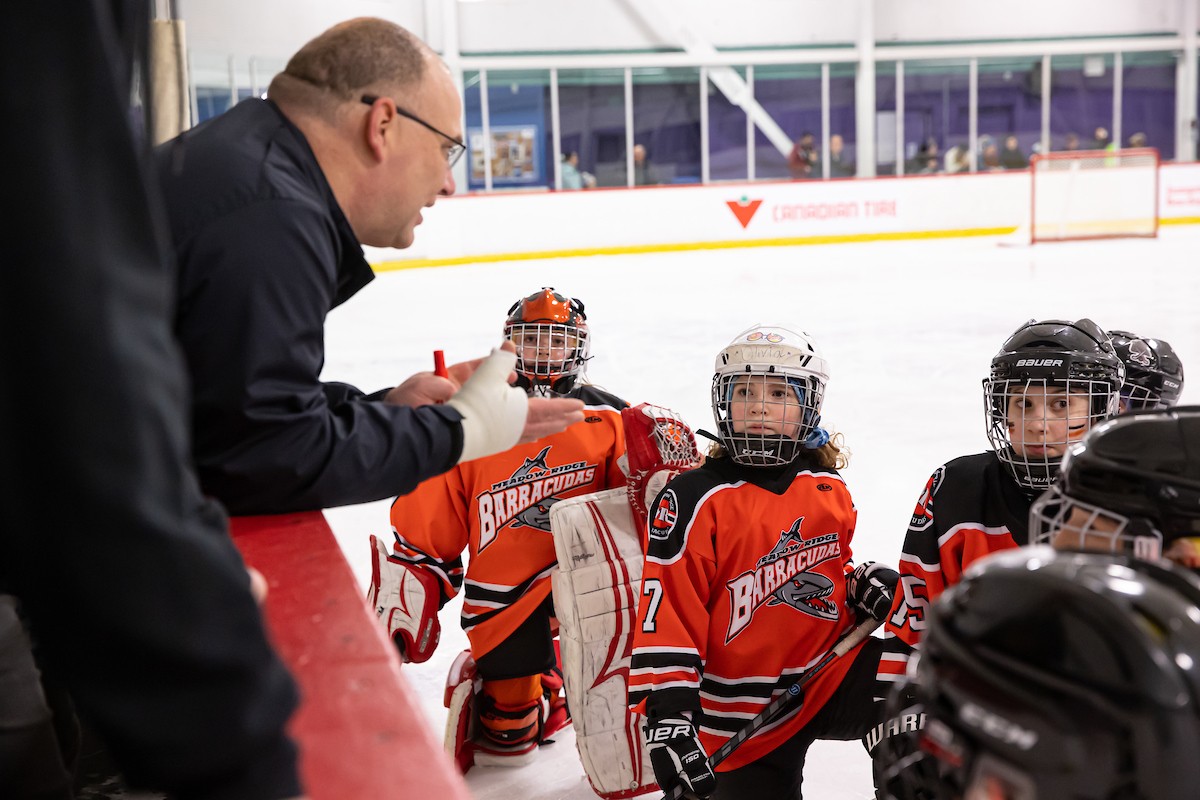
The Western Branches of Hockey Canada – BC Hockey, Hockey Alberta, Hockey Saskatchewan, Hockey Manitoba, and Hockey North – are excited to bring you the third newsletter of our 2026-2027 U9 Development Support Program! We hope you’ll find the resources we share with you with this season useful as you deliver U9 hockey in your region and help your players successfully transition from cross-ice to half-ice.
Please have a look at what we have to share with you this month:
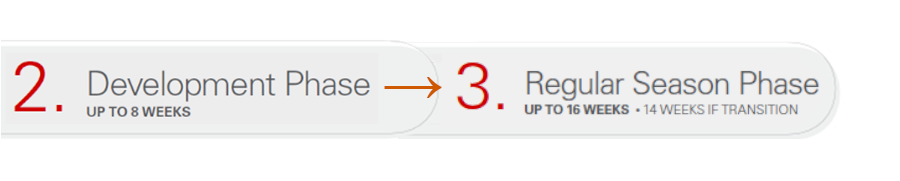
We’re nearly through November – you’re nearly through the Development Phase of the U9 Pathway, and will be into the Regular Season Phase soon!
The Regular Season Phase runs for 14-16 weeks after the conclusion of the Development Phase, depending on whether or not your team plans to transition to full ice after December 25. By that timeline, you can plan for this phase to last until the end of February.
Recommendations in these transitioning phases:
- DEVELOPMENT
- Ideal practice-to-game ratio is 3:1 – three practices to one game played
- 14 practices, up to 6 games, 1 jamboree
- Half-ice games
- A fun and safe environment to promote self-confidence
- Focus on skill development
- Fundamental movement skills: striding, turning, stopping
- Manipulation skills: shooting, passing, puck control
- Motor skills: agility, balance, coordination
- Ideal practice-to-game ratio is 3:1 – three practices to one game played
- REGULAR SEASON
- Ideal practice-to-game ratio is 2:1 – two practices for every game played
- 34 practices, up to 22 games, 1 jamboree
- Half-ice games
- Continued focus on skill acquisition and development
- Recommendation: 2 seasonal breaks
- Not including Christmas/long weekends
- Minimum 5 days without a scheduled game or mandatory practice
- Ideal practice-to-game ratio is 2:1 – two practices for every game played
For full details, please review the U9 Player Pathway document in its entirety HERE
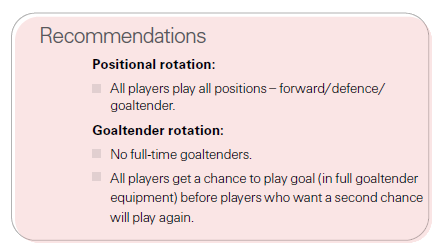
This month’s newsletter brings a focus on coaching U9 goaltenders. Hockey Canada’s U9 Player Pathway does not permit full-time goalies but instead encourages all players to try it. All players should have the same opportunity to contribute to the team at every position – regardless of skill or ability – including turns in net.
A reminder of the Pathway recommendations related to netminders in this Phase:
If your association is low on goalies, consider:
- Implementing a team rule like every player should take at least one turn in net, but allow players to decline if they’re really opposed and/or extremely apprehensive.
- Hosting “try goalie” nights throughout the season, providing equipment and goalie-focused instruction in a no-pressure environment
Getting a player comfortable in goal goes a long way to easing their apprehension to try — the following tips can aid in that effort.
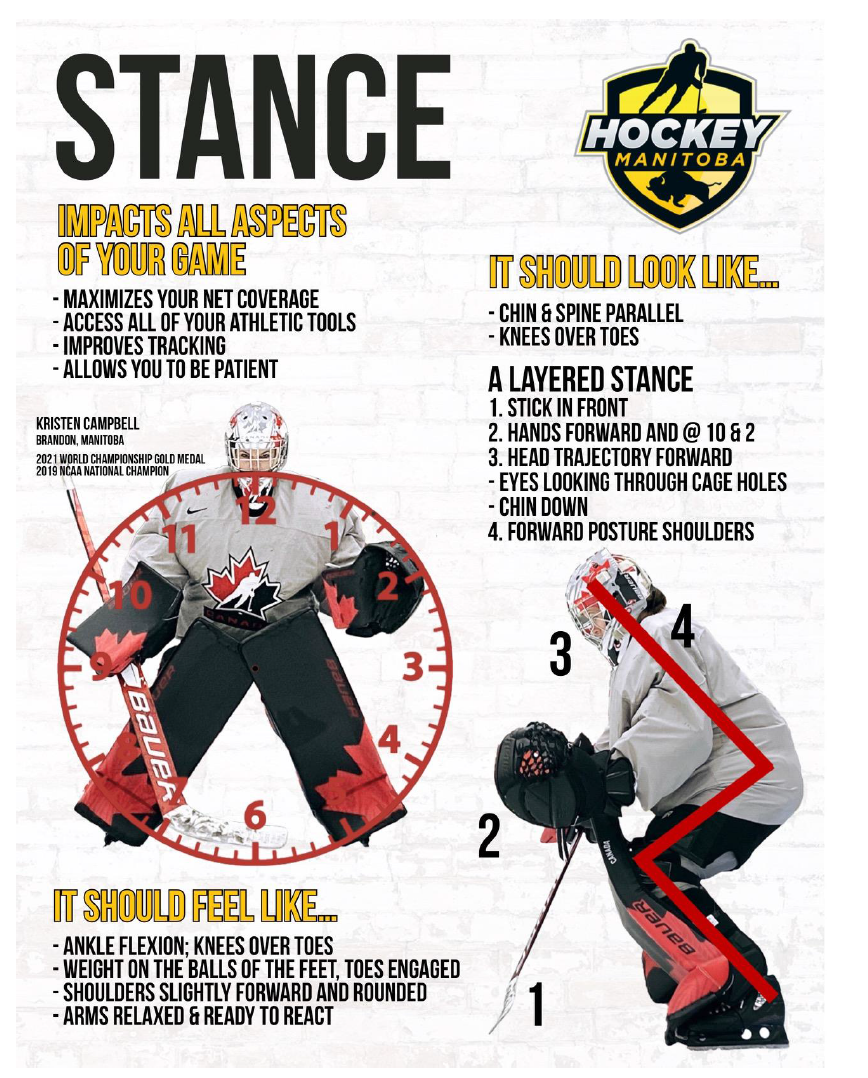
First thing’s first. Making sure your new goalies’ posture and stance are correct from the beginning will help them learn to move efficiently wherever they need to go to make a save. It will also help them know what position to return to after making a save or getting out of position.
Share this infographic with your young netminders and help them understand how a goaltender should look, feel, and why.
Stick Work
Part of a goalie’s stance is holding their stick properly. For a new goalie, this will feel much different than the player’s stick they’re used to. A few tips on goalie stick grip:
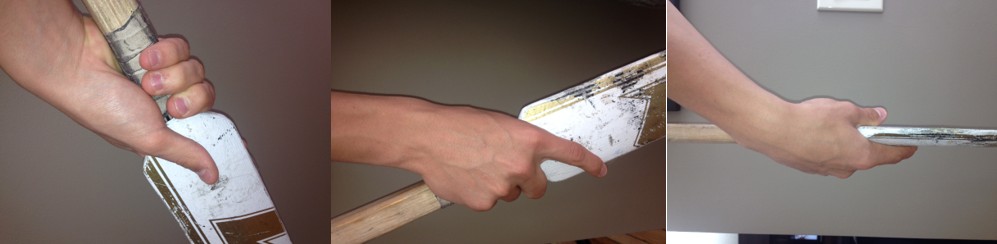
- Know which hand your goalie catches with – while the majority of goalies catch with their left hand, there are others that catch with their right. The stick should be held in their non-catching hand by what’s likely their dominant hand. A goalie catching with their left hand will need a stick curved left, and the opposite for a goalie catching with their right hand. Make sure you have the correct equipment available!
- Stick blade at a slight angle with the toe of the stick ahead of the heel; covering the 5 hole (stick falls naturally in place with your hands and in front of skates)
- Blocker rotated outwards slightly
- Stick Grip: For optimal control and strength, stick is held at the shoulders of the stick (top of the paddle) with index finger gripping side of the paddle and supported behind with the thumb. This allows the goalie to steer on ice shots away to corners.
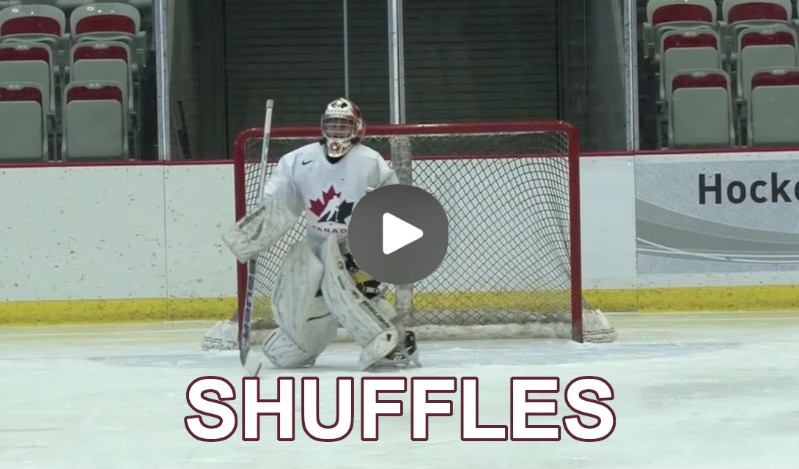
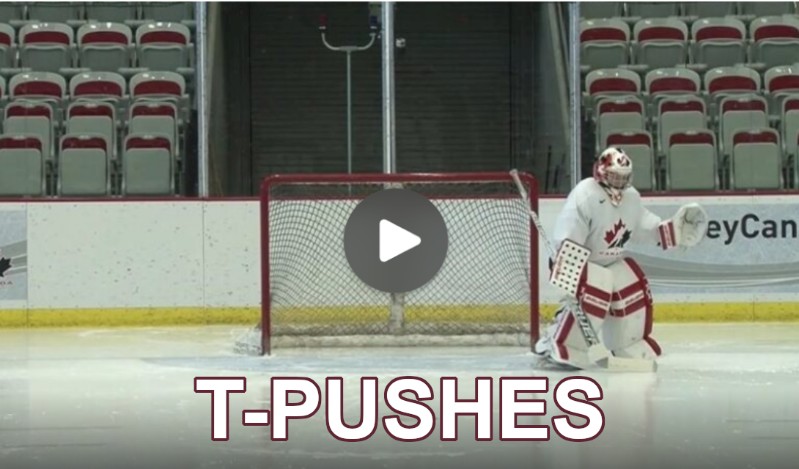
Knowing how to stand, get up, and hold their stick properly is a good start. Next, goalies have to learn how to move too. Here are some great skating and movement skills for U9 goalies to practice as they adjust to the position (click image for video):
Get Up!
As goalies learn to move, it’s inevitable that they will fall. After falling, it’s important that a goalie get back up and return to a standing playing stance as quickly as possible. Some basics to aid the recovery process:
- Get onto your stomach as quickly as possible. Place your glove and blocker on the ice palms down for extra stability if necessary and push back to shift onto your knees.
- Drive one knee up and underneath your chest, planting that leg’s skate blade flat onto the ice.
- Push up explosively from the middle of the planted leg’s skate blade and lift your upper body back into goalie stance, with both skates returning back to roughly shoulder width apart.
- Keep your eyes on the puck and get ready to make the next save!
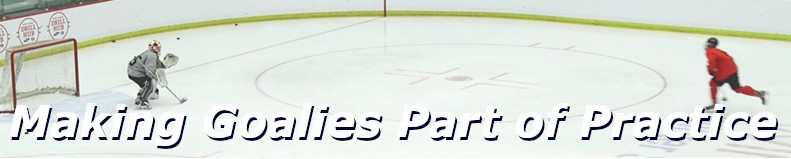
Your goalie will improve doing team drills, but dedicating time directly to them will give your goaltender(s) the attention they deserve and make them feel like an equally important part of the team rather than an afterthought. Tips to successfully integrate netminders into practice plans:
- Make time for one dedicated goalie drill per practice
- Assign assistant coaches to work with your goalies privately at the start of every practice at one end of the ice, and continue to support them throughout practice
- Provide consistent instruction to every player trying goalie
- Encourage goalies to coach each other through skating drills and mirror drills when they are idle in practice
- Make your warm-up drill a goalie specific drill. Consider using the first or last ten minutes of practice specifically for coach controlled goaltending drills
- Remind the players – no head shots! Goalies should finish a warm-up drill with increased comfort and confidence.
- When explaining drills to the team, be sure to inform the goalie where to be and what to expect
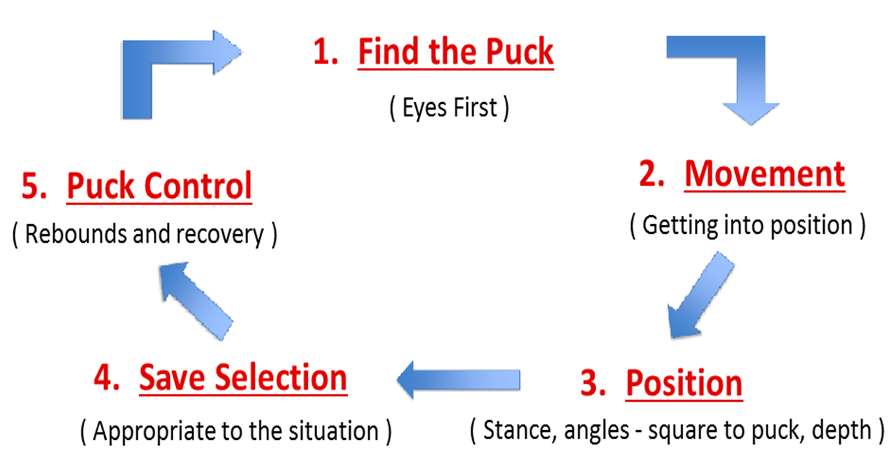
- Educate your goalies on the stages of the Save Cycle (pre-save, save, and post-save):
Goaltending is one of the most crucial and specialized roles in the game of hockey, and because of that it can be somewhat intimidating for the average coach to teach. One constant for goalie development is coaches working with them during the first 10 minutes of practice. Do you and your coaches utilize this timeframe in a way that better educates your goalies on how to play the position? This can be a hard ask for many of us because we’re not trained or specialized goalie developers. The teaching details of this position are evolving though, and we as coaches need to keep up so we can help our players improve.
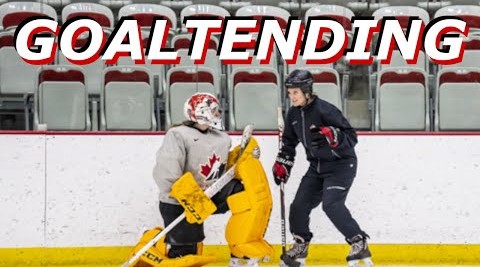 While overlooked at times, a great goalie is often the backbone of a team and their impact on the game is impossible to ignore – considering how important we all agree they are to our teams, let’s set high standards for them starting from warm-up at practice, give them more challenging work, and better aid their development trajectory. Have a look at Hockey Canada’s latest video to see game clips, drill examples, and more details to help you teach goaltending skills to your netminders.
THIS MONTH’S DRILL BREAKDOWN:
Drill Name: Goalie Movement Drill
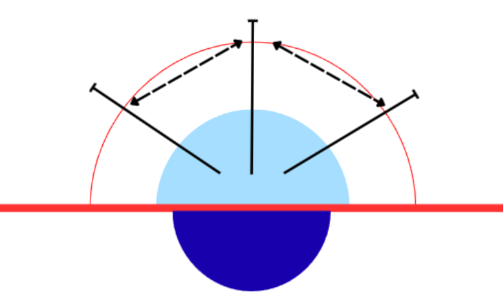 Drill Description:
- Goalie starts in the center of the crease in a ready position.
- Goalie moves to the top of the crease on either post (solid black line on diagram)
- Goalie drops into butterfly, gets up and recovers back into ready position.
- Goalie T-pushes over to center position.
- Repeat going across the crease to all three positions. Do this in both directions.
Skill Execution/ Relation to Hockey Canada’s U9 Roadmap: This drill has goalies working on their mobility skills, tracking the puck, and butterfly saves.
Teaching Points
- Keep knees together in butterfly positions
- Have chest and shoulders angled forward towards the puck
- Head is center and tracking the puck
- Lead foot is pointed towards target, back foot pushes
- Stick stays on the ice
- Glove is in 2-3 o’clock position
Coach Responsibilities
Observe the goalie’s proper execution of:
- Proper athletic ready position with knees bent, glove hand up, and stick on the ice
- Positions out in front of the crease, not collapsed into the net
- Proper butterfly position with knees together
- Front foot is pointed in the proper direction for T-push
- Back foot brings goalie to a stop in the T-push
- Shoulders and head are facing forward
Progressions
- After dropping into the butterfly position, remove the stand up and T push, and slide over to next position instead.
- Eliminate dropping into butterfly first. Have the goalie move out to the position at the top of the crease, drop and slide from position to position.
Add players to the drill
- Have shooters at each position that shoot at the goalie each time they transfer from position to position.
Simplify
If the drill is too challenging, complete the first progression of the drill as a slower pace and remove the stick if needed. Reintroduce the stick when the goalie is more comfortable.
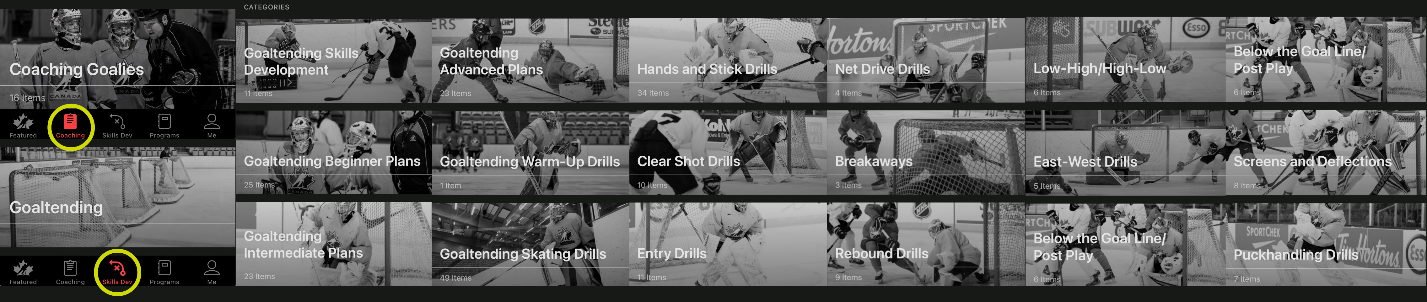
Need help finding level-appropriate goaltending practice plans and drills? The Hockey Canada Network App has you covered – Both the “Coaching” and “Skills Dev” tabs at the bottom of the screen will show you a plethora of goaltender training resources that you can access anytime:
Appendices
For even more info on coaching goaltenders, we recommend the following supplemental resources which take an in-depth look at topics such as tracking, positioning, save selection, rebound control, puck handling, practice, communication, goalie coaches, goalie parents, and more:
- Hockey Canada Instructional Stream – Goaltending 1 Reference Materials
- Hockey Canada Goaltender Development Resources
- Hockey Alberta’s Goaltender Guide
- How to put on goalie equipment [USA Hockey video]
- At what age should your child become a full-time goaltender? [article by Corey Hirsch]
- Teaching a beginner goaltender [article by Corey Hirsch]
Thank you for helping your U9 players acclimate from cross-ice to half-ice within your local program this year!
Have you created resources that have helped you acclimate your U9’s to half-ice play this year or previously? Would you like to share them with other U9 coaches in Western Canada to assist their development efforts? Email us your best resource for review and we may share it in an upcoming newsletter. 📩 coaching@bchockey.net
We hope you found this newsletter helpful! We look forward to reconnecting with you again next month.
Share